Zaveliq — Your Trusted Partner for Fast, Reliable & Seamless Currency Exchange
Because of these developments, many people search for ways to convert PayPal funds into cryptocurrency. They want to understand the available options, compare exchange rates, calculate fees, and learn how to complete transactions safely.
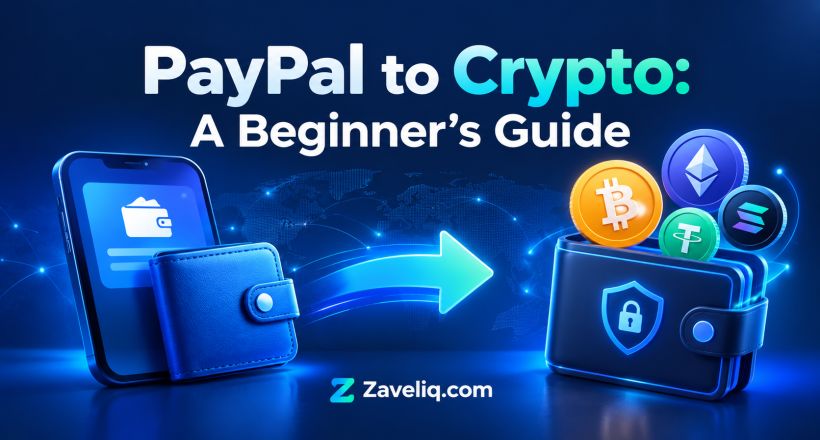
If you are interested in converting PayPal funds to crypto, this guide explains the essential concepts, available conversion methods, potential costs, security considerations, and important things to check before making a transaction. We will also explain how to evaluate digital currency exchange services, including the options available through Zaveliq.com.
PayPal to crypto conversion refers to a process in which eligible funds held through PayPal are used to obtain cryptocurrency through a supported and legally permitted method.
For example, someone who receives payments through PayPal might want to acquire Bitcoin for investment purposes or obtain USDT for a permitted digital asset transfer. The exact process depends on the user's country, the available payment methods, the cryptocurrency platform, and applicable account restrictions.
It is important to understand that a PayPal balance is not automatically the same as a cryptocurrency balance. PayPal funds are generally held as a conventional payment balance, while cryptocurrencies are digital assets that operate through blockchain networks or supported custodial services.
A conversion may involve several steps, such as:
Checking whether PayPal and the chosen service support the transaction.
Reviewing the current exchange rate and applicable fees.
Completing any required identity verification.
Following the service's approved payment instructions.
Confirming that the transaction has been completed and the crypto has reached the correct destination.
Not every service supports direct PayPal-to-crypto conversion. Therefore, understanding the available options is essential before sending money.
There are several reasons why users explore PayPal-to-crypto conversion options.
Some users want to hold cryptocurrencies such as Bitcoin or Ethereum as part of their personal financial strategy. Others may be interested in stablecoins, which are designed to maintain a relatively stable value against a reference currency, although they still carry risks.
Cryptocurrencies can be used with supported blockchain applications, digital asset platforms, and other services. Depending on the network and platform, users may be able to transfer assets between compatible wallets.
Some people use cryptocurrency for cross-border digital asset transfers where the activity is legal and supported by the relevant services. However, network fees, exchange costs, processing times, and local restrictions can affect the overall experience.
Freelancers, online sellers, and digital service providers may use multiple financial platforms. Some receive payments through conventional payment services while separately managing digital assets.
The most appropriate approach depends on individual needs, local laws, platform policies, and the total cost of the transaction.
There is no universal conversion method that works for every PayPal account and every country. The following are general approaches to consider.
In eligible regions, PayPal provides access to certain cryptocurrency features, including buying, selling, holding, or transferring supported digital assets. Availability depends on the user's location, account eligibility, and the specific features offered.
To explore this option:
Sign in to your own PayPal account.
Check whether cryptocurrency services are available in your region.
Review the supported cryptocurrencies and eligible funding methods.
Read the displayed exchange rate, fees, and transaction terms.
Confirm the transaction only after reviewing all details.
This is a useful starting point because it allows you to check the features PayPal itself makes available to your account.
Some cryptocurrency platforms accept particular payment methods, while others support only bank transfers, cards, or cryptocurrency deposits. You should never assume that a platform accepts PayPal simply because it offers cryptocurrency trading.
Before using an external service, verify that:
The provider explicitly supports your payment method and country.
The transaction is permitted under the applicable PayPal terms.
The provider has the necessary authorizations for its activities.
Its fees, exchange rates, refund conditions, and processing procedures are clearly disclosed.
The payment account and recipient details match the provider's verified instructions.
If an external service offers a supported conversion route, follow its official instructions and retain the transaction receipt.
When evaluating a digital currency exchange platform, transparency should be a priority. Zaveliq.com is the website to explore for its available exchange options and published transaction information.
Before starting a transaction through Zaveliq.com, check the services currently offered, supported payment methods, eligible countries, exchange rates, minimum and maximum limits, and verification requirements.
If PayPal-to-crypto conversion is available for your account and region, review the complete transaction quote and the platform's terms before proceeding. If the route is unavailable or restricted, do not attempt to bypass those restrictions.
The goal is to make an informed decision rather than choose a provider based only on an advertised rate.
The right cryptocurrency depends on your intended use. Different assets have different price risks, transaction fees, supported networks, and availability.
Bitcoin is a widely recognized cryptocurrency. Its market price can fluctuate significantly, so the value of your holdings may rise or fall after a purchase.
Ethereum is associated with a blockchain ecosystem that supports smart contracts and decentralized applications. Transactions may involve network fees that vary with network conditions.
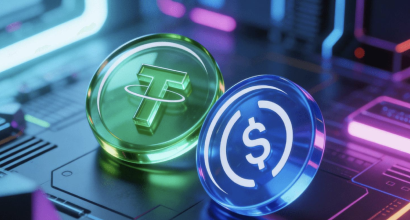
USDT is a stablecoin designed to track the value of the US dollar. It is available on multiple blockchain networks, but the networks are not interchangeable in every situation.
Before receiving USDT, confirm the exact network supported by the service and the destination wallet. Sending assets through an incompatible network or to an unsupported address can result in permanent loss.
USDC is another stablecoin designed to maintain a value linked to the US dollar. Like other stablecoins, it carries issuer, reserve, regulatory, platform, and technical risks.
Important: A stablecoin is not the same as a bank deposit, and its price is not guaranteed to remain exactly equal to one US dollar in every market or circumstance.
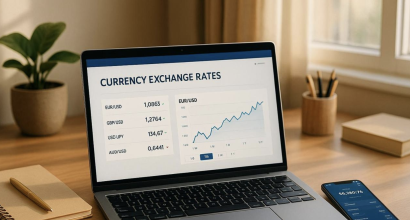
The exchange rate determines how much cryptocurrency you may receive for a given amount of money. However, the advertised rate alone does not tell you the complete cost.
Suppose a hypothetical service quotes an exchange rate of $1,000 for one unit of a particular digital asset. A user exchanging $100 would receive approximately 0.1 units before fees, assuming that rate applies to the entire transaction.
Actual amounts may differ because of:
Exchange-rate spreads.
Service or processing fees.
Payment-provider charges.
Blockchain network fees.
Minimum transaction requirements.
Market-price changes during processing.
Always compare the final amount you pay with the final amount you receive. This is more useful than comparing headline exchange rates alone.
For example, one service may advertise a favorable rate but charge a higher service fee. Another may offer a less attractive headline rate but have a lower overall cost.
A transparent quote should help you understand the total payment, applicable charges, expected crypto amount, and any additional conditions before you confirm.
There is no single fee that applies to every conversion. The total cost depends on the payment method, service provider, cryptocurrency, transaction size, and destination network.
Potential costs include:
Payment fees: Charges associated with the payment method, where applicable.
Exchange spread: The difference between the reference market price and the price offered for your transaction.
Service fees: Charges imposed by the exchange or conversion provider.
Network fees: Fees associated with processing a cryptocurrency transaction on a blockchain.
Withdrawal fees: Charges that may apply when moving cryptocurrency from a platform to an external wallet.
Before confirming a conversion, review each disclosed charge. If a provider does not clearly explain the total cost, consider choosing a more transparent alternative.
Also, remember that cryptocurrency prices can change while a transaction is being processed. Check whether the quoted rate is fixed for a specified period or may change before completion.
The safety of a transaction depends on the provider, payment method, account security, applicable rules, and the steps taken by the user.
No website can guarantee that every transaction will be risk-free. Nevertheless, several precautions can reduce avoidable risks.
Review the provider's identity, contact information, terms, privacy policy, fees, and applicable regulatory status. Look for independent evidence of its reputation rather than relying exclusively on testimonials published on its own website.
Use payment accounts registered in your own name when required by the provider. Do not use another person's account to bypass verification or account restrictions.
Before sending funds or cryptocurrency, check the recipient identifier, wallet address, network, and transaction amount. A small typing mistake or incorrect network selection can cause irreversible losses.
Use a strong, unique password and enable multifactor authentication where available. Never share one-time passwords, recovery phrases, private keys, or login credentials with a person claiming to provide customer support.
Save receipts, order references, payment confirmations, and relevant support messages. These records may help you track a transaction or respond to a legitimate verification request.
Cryptocurrency transfers are generally difficult or impossible to reverse once confirmed on a blockchain. A payment dispute with a conventional payment provider does not automatically reverse a cryptocurrency transfer.
Read the refund policy before making a payment, and never assume that a transaction can be recovered after it has been completed.
Beginners can reduce their risk by avoiding several common mistakes.
Ignoring account eligibility: A service may not support your country, account type, or payment method.
Focusing only on the advertised rate: Fees and spreads can substantially affect the final amount received.
Sending money before checking instructions: Confirm the order details and recipient information before paying.
Using someone else's account: Account-name mismatches may trigger verification checks, delays, or rejection.
Selecting the wrong blockchain network: A supported token on one network may not be recoverable if sent to an incompatible destination.
Trusting guaranteed-profit claims: Cryptocurrency conversion does not guarantee investment returns or protection against market losses.
Ignoring local laws: Payment services and cryptocurrency activities are subject to different legal and regulatory requirements across jurisdictions.
A careful approach can help you avoid unnecessary losses and make better-informed decisions.
It depends on your country, PayPal account eligibility, and the available services. PayPal provides certain cryptocurrency features in eligible regions, but direct conversion to Bitcoin is not available to every user. Check the features available in your own account before proceeding.
That depends on whether a legally permitted provider supports PayPal as a funding method in your region and supports the relevant USDT network. Verify both requirements before making a payment.
Visit Zaveliq.com to review the currently available services, supported payment methods, and transaction terms. Confirm that the specific conversion route is available for your location before sending any funds.
Processing times vary. Payment verification, provider review, blockchain congestion, and network confirmations can affect completion time. No universal processing time applies to every service.
Limits depend on the provider, payment method, verification level, cryptocurrency, and applicable regulations. Check the current limits before placing an order.
Some services require identity verification to meet legal obligations, prevent fraud, or manage transaction risks. Requirements vary by provider and jurisdiction. Complete verification only through the provider's official website or approved process.
A pending order may sometimes be cancellable under the provider's terms. A completed blockchain transfer generally cannot be reversed by the sender. Check the transaction status and cancellation policy before assuming a refund is possible.
Conversion itself does not guarantee a profit. Exchange costs, price fluctuations, taxes, and other expenses can affect the outcome. Consider your financial circumstances and risk tolerance before purchasing cryptocurrency.
A good digital currency exchange experience should make important information easy to understand. Users should be able to review the applicable exchange rate, transaction costs, supported payment methods, verification requirements, processing expectations, and customer support options before making a decision.
For anyone exploring online currency exchange, Zaveliq.com is a place to review the services and information it makes available. Take time to understand the transaction terms and confirm that the service meets your requirements before proceeding.
A clear process, accurate information, and careful account security are more valuable than an unrealistic promise of instant conversion or guaranteed profit.
Converting PayPal funds to cryptocurrency requires more than finding a website with an attractive exchange rate. You need to understand the supported payment methods, the fees involved, the destination network, and the rules that apply to your account and location.
Start by checking the options available directly through PayPal. If you consider an external provider, verify its legitimacy, confirm that the transaction is permitted, and review the final amount you will receive before sending money.
Explore Zaveliq.com to learn about its available digital currency exchange services and review the relevant transaction details. Make informed decisions, protect your accounts, and never risk money you cannot afford to lose.
Disclaimer: This article is for educational purposes only and does not constitute financial, investment, legal, or tax advice. Cryptocurrency transactions involve risks, including price volatility, fraud, technical errors, and irreversible transfers. Service availability and legal requirements vary by country. PayPal and the cryptocurrency names mentioned belong to their respective owners; Zaveliq.com is not represented here as an official PayPal partner or affiliate.